Eva and Rebecca Plan for Steef to Get Eva Pregnant
Nieuwe burenEva and Rebecca’s plan to have Steef father Eva’s child in secret transforms a wish for pregnancy into an act of reproductive deception. It emerges from the strain of Peter and Eva’s infertility and their incompatible hopes for a way forward, then takes shape as a proposal to use a partner swap and the possibility of a leaking condom. The scheme is framed as help given in love, but it depends on withholding a decisive fact from Steef—and on deciding, without his knowledge, what his participation will mean.
The pressure behind the proposal
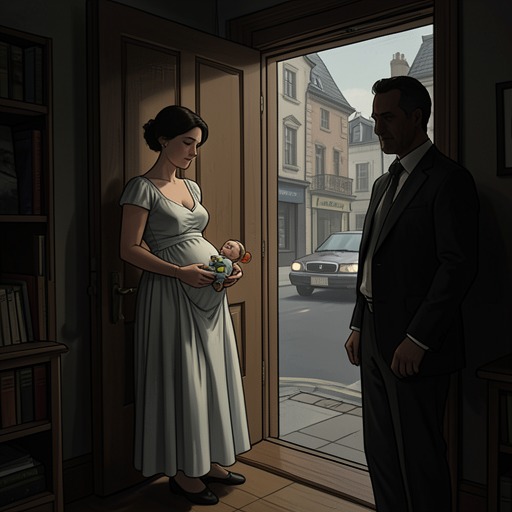
Peter and Eva’s plan follows a long effort to conceive. After a year of trying, their general practitioner reassures them that the absence of pregnancy is not, by itself, a reason for alarm, and recommends tracking Eva’s temperature to identify ovulation. The practice turns sex into a timetable: each morning at half past six, Eva takes her temperature, and a rise of 0.2 degrees Celsius signals that they should try. Peter describes the intimacy as increasingly mechanical, with foreplay cut short and intercourse organized around ejaculation and work schedules.
The routine sharpens a disagreement that is already emotional. Peter wants a child with Eva but resists entering medical treatment, longing for conception to come from love rather than a clinical procedure. He also misses the intimacy they had before trying for a baby. Eva, by contrast, fears giving up on a desire that has come to dominate her life. She argues that testing could reveal a straightforward problem that might be treated. After their argument, they accept a referral to a gynecologist. Eva’s examination and scans show no obvious reproductive abnormality, but two sperm tests find that Peter has too few sperm and that those present move poorly. The medical route appears to be their remaining chance of having a child together.
Rebecca’s offer and Eva’s insistence
In the later conversation, Rebecca acknowledges that it has been easy for her to become pregnant and says she wishes the same were true for Eva. She offers to carry a child for them. Eva rejects that solution as a substitute for pregnancy of her own: she wants to feel the child in her body, give birth, and have a child connected to her by blood. Her longing is not simply for a baby to raise; it includes the experience of gestation and a bodily bond she fears adoption cannot provide.
Rebecca challenges the idea that adoption can satisfy that longing. Peter, she says, will not return to the hospital for donor insemination, IVF, or ICSI, leaving adoption as the compromise he can accept. Yet she argues that Eva may bear most of the work of raising an adopted child while lacking the bond she associates with a birth mother. The conversation takes place with Sem present. Peter watches the child reach for Rebecca and settle into her arms, a tender domestic scene set beside an argument about who can become a parent, by what means, and with what kind of bond.
Rebecca then proposes a different answer: Steef could provide the sperm. Her suggestion is startling because she presents it as a simple gift that could make Peter and Eva happy, not as a decision with consequences for Steef. She explicitly says he need not know. In her account, his biological contribution would not make the child his; it would make the child Peter and Eva’s, with Rebecca and Steef merely helping them. That reassuring language obscures the central problem: Steef has not agreed to become a donor, and the couple whose future is being discussed would be making that choice for him.
A plan concealed inside a partner swap
Peter objects that Steef had not wanted a child with Rebecca, much less with Eva. Rebecca answers that this would be different and proposes that they avoid discussing it with either man, because consultation would make matters too complicated. She also entertains the possibility that Peter might father the child after all, despite the test results. The plan therefore rests both on hope and on deliberate secrecy: the women will proceed without knowing whether Peter’s sperm could result in a pregnancy and without telling Steef what they intend.
When Peter asks how they would bring it about, Rebecca proposes a partner swap around Eva’s next ovulation. If the first attempt does not work, they can arrange another. Peter raises the condom; Rebecca replies that it could leak. His question about whether they would be deceiving the men makes the hidden design explicit. Rebecca instead places the plan in a language of fate and shared purpose, presenting the possible conception as something that may be meant to happen. She reassures Peter that a child made and welcomed with love would be different from conception in a laboratory. That distinction matters to them, but it does not resolve the absence of Steef’s informed consent.
The later partner-swap scene makes the contrast between the couple’s stated sexual boundaries and the concealed reproductive aim especially sharp. Before the encounter, Steef stresses that everyone should discuss how far they are willing to go. He and Rebecca describe different forms of swapping, including full swapping, and explain that anyone can refuse an act, push a hand away, or end the encounter with a signal. Their rules give participants a way to set limits in the moment. But the plan to use the encounter to cause a pregnancy has not been disclosed to Steef, so the sexual agreement cannot amount to informed agreement about its reproductive stakes.
During the encounter, Eva finds herself unable to relax into the sexual activity. She is conscious of each movement and of the need to account for the other people involved; what she experiences feels mechanical rather than spontaneous. Her attention remains caught between the planned outcome and the intimate scene in front of her. The gap between the encounter’s shared language of rules and the concealed purpose Rebecca has proposed gives the episode its moral tension: consent is discussed, but the information necessary to consent to the plan is withheld.
From private scheme to open conflict
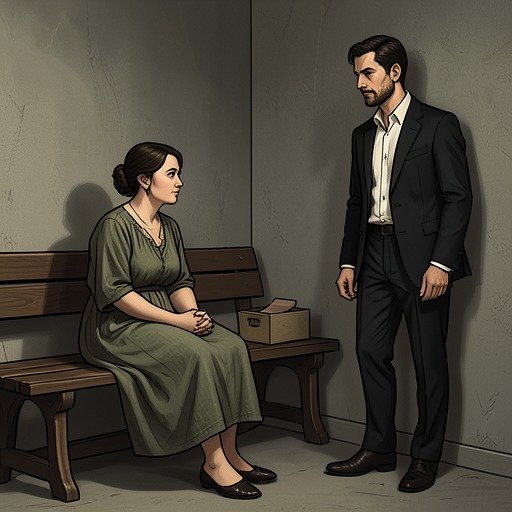
The later events establish that the proposed conception became more than a fantasy. After a condom mishap, Steef brings Eva a box of morning-after pills, apologizes for his part in what happened, and says he does not want another child. He says Sem came against his will, while also explaining that he is trying to be a good father and doubts his own stability. His response makes clear that he understands fatherhood as an unwanted consequence, not as a role he chose through an agreement to help Peter and Eva.
The secrecy eventually breaks. When the truth is forced into the open, Steef accuses Rebecca of taking his sperm with his wife’s consent and calls what they did criminal. His anger is not only about the biological fact of paternity: he objects to having his reproductive capacity treated as something others could use and define on his behalf. The accusation reverses Rebecca’s framing of the plan as a loving gift. The same act that she had presented as a route to Peter and Eva’s happiness becomes, for Steef, evidence that his choice and his claim to determine whether he becomes a father were disregarded.
The plan thus links the novel’s infertility story to a conflict about who controls conception and who bears its consequences. Peter and Eva’s medical disappointment, Eva’s desire to experience pregnancy, and Rebecca’s confidence that she can manage the situation all help explain how the proposal takes shape; none cancels the secrecy at its center. Its decisive irony is that an attempt to secure a child through intimacy begins by bypassing the consent that makes intimacy meaningful.